This article reveals for the first time exclusive and up-to-date data on women working in the media across the Arab world. Until now, this picture simply did not exist. For years, global conversations about gender equality in media have unfolded without the support of solid evidence. Most numbers are scattered, outdated, and focused on Western countries. Across the Arab region, the situation is even more fragile. In most cases there are no official statistics at all on women’s participation in journalism or media production.
We know that women are there, writing, filming, editing, producing, and leading. Yet their contribution rarely appears in the data that guide public policy, investment, or innovation. This absence is not just a gap in research. It has real consequences. When women are missing from evidence, they are also missing from the decisions that shape their professional lives. Opportunities fade, resources are misdirected, and the stories that could redefine public understanding remain untold.
It was from this silence that our recent survey was born. It is a modest but meaningful effort to listen and document what official reports have overlooked for too long. Conducted among journalists and media professionals in Tunisia, Egypt, Syria, and Algeria, it offers exclusive and firsthand insights into the realities that shape women’s work in the media today.
These findings are not drawn from archives or old reports. They are living voices from the field, shared by professionals who experience these challenges every day in environments where reliable data are almost never collected or shared. What they reveal is both urgent and constructive. Women are not asking for symbolic gestures or abstract inclusion. They are asking for knowledge, safety, and recognition — the practical tools that allow them to thrive. The survey offers one of the few current and evidence-based glimpses into the real state of women in Arab media today.
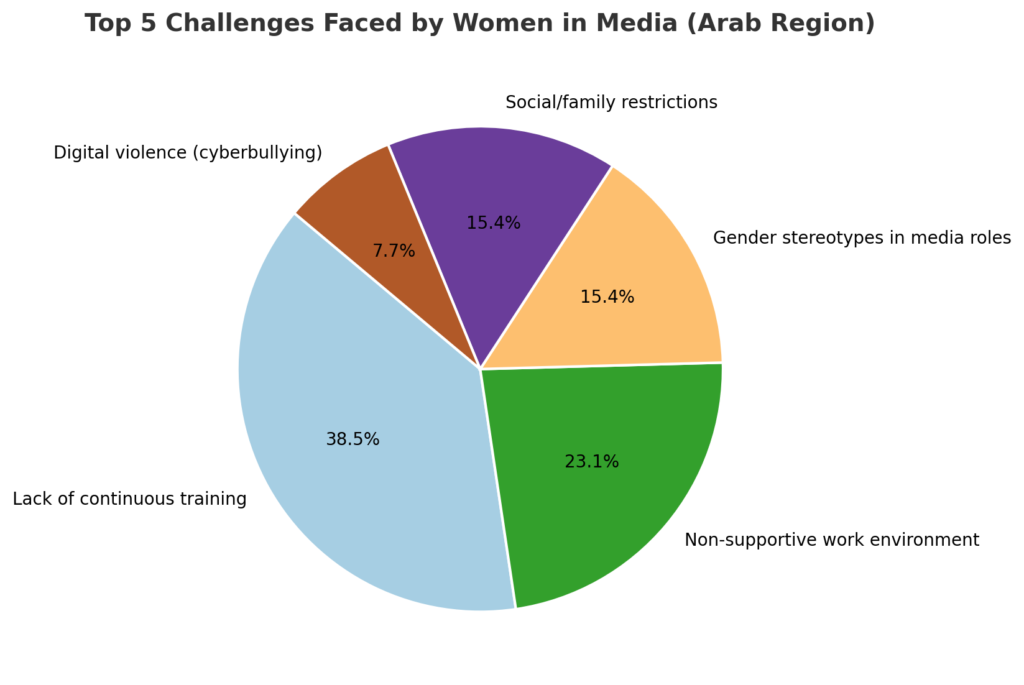
Top 5 Challenges Faced by Women in Media in the Arab Region
The five main challenges identified in the survey tell more than just numbers. They reveal the complex landscape that women in media navigate every single day. The most common obstacle is the lack of continuous training and professional development. This gap slows progress and often prevents women from advancing in their careers. Many participants described how, without access to regular learning opportunities or mentorship, their professional growth stops long before their potential does.
Another recurring challenge is the absence of supportive work environments. Many women work in newsrooms where equality policies exist only in official documents. Decisions about assignments, promotions, or leadership roles are often shaped by informal networks and unspoken biases. Even when management expresses a commitment to gender balance, real implementation often falls short.
Gender stereotypes also remain deeply rooted. Women are still more likely to be assigned to lifestyle, culture, or social topics, while politics, economics, and investigative reporting are often considered male territory. This does not only restrict professional growth but also limits the diversity of perspectives and voices represented in public debate.
Social and family expectations continue to shape professional life as well. In many contexts, cultural norms or family responsibilities limit women’s ability to travel or cover field stories. For journalists, whose work depends on mobility and access, this often means losing opportunities that could define their careers.
Digital harassment completes the top five. It is a growing threat that comes with every new online platform. Across the region, women journalists describe the personal and professional impact of online abuse, targeted trolling, and smear campaigns. These experiences affect confidence, encourage self-censorship, and push many to withdraw from public engagement both online and offline.
Beyond these five, participants mentioned other ongoing barriers such as unequal pay, limited leadership opportunities, lack of work-life balance, and the absence of confidential and effective systems for reporting harassment. Together, these challenges form an invisible ceiling that continues to limit women’s ability to fully shape the stories that shape the world.
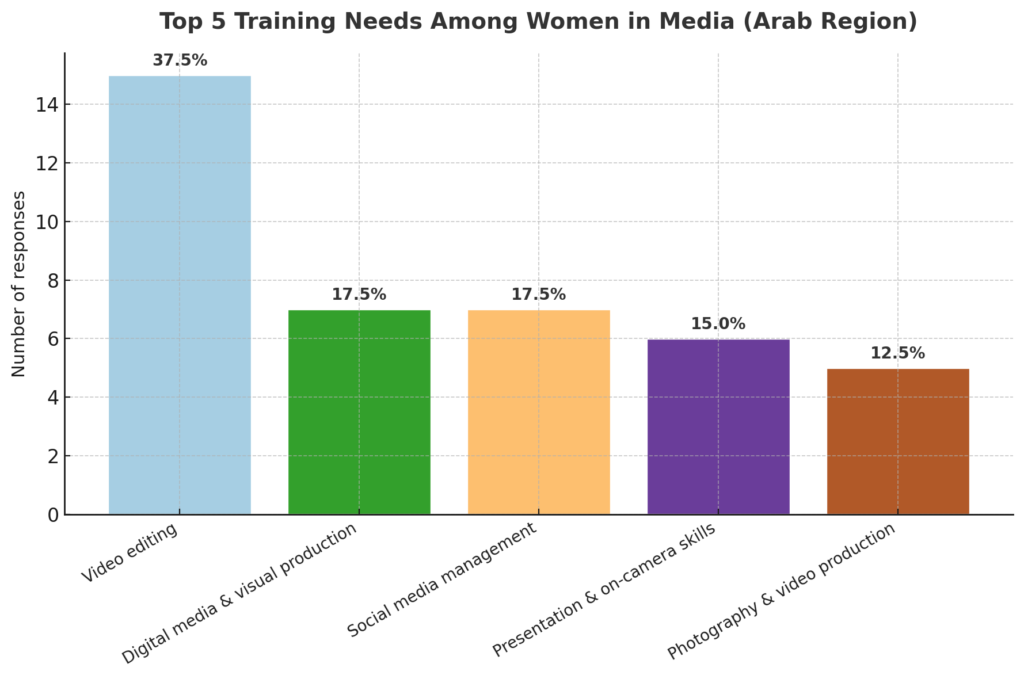
Top 5 Training Needs Among Women in Media in the Arab Region
If the first set of findings reveals the obstacles, the second offers a glimpse of the solutions. The most requested training area is video editing. It is a skill that gives journalists creative control over how stories are told. For many women, learning editing tools means gaining independence from technical teams and being able to produce complete multimedia stories on their own.
Close behind is digital media and visual production, reflecting the transformation of today’s newsroom. Journalism now lives on screens, and women across the region are eager to master new forms of storytelling that combine video, graphics, and interactive formats. They want to move beyond contributing to content and become full producers who can compete on a global scale.
Social media management ranks third. Women journalists understand that visibility and credibility now depend on how well they navigate digital platforms. Learning to engage audiences, understand algorithms, and build a professional online presence has become part of the job itself. Social media is no longer only a tool for promotion but an essential part of the editorial process.
Next comes presentation and on-camera communication. For many respondents, this represents the opportunity to find their voice in every sense. It is about developing confidence in front of the camera, leading interviews, and hosting discussions with authority and authenticity. In a region where women’s visibility can still be challenged, this skill is itself a form of empowerment.
Photography and video production complete the top five, showing the importance of technical autonomy. The ability to frame, light, and capture powerful visuals is central to modern journalism and opens new paths in documentary and digital content creation.
Beyond these areas, respondents expressed a growing interest in investigative journalism, writing and editing, safety in fieldwork, and digital marketing. These skills together form the foundation of a new generation of journalists who are not only participants but leaders. This list of training needs is more than a set of requests. It is a roadmap toward professional independence and sustainable growth.
The Questions We Can No Longer Avoid
The findings lead to deeper questions about the future of information. How can artificial intelligence claim to reflect reality when half of humanity is missing from the data that train it? And how can we speak of media development in regions where we do not even know who produces the news, under what conditions, and with what access to resources, technology, and decision-making?
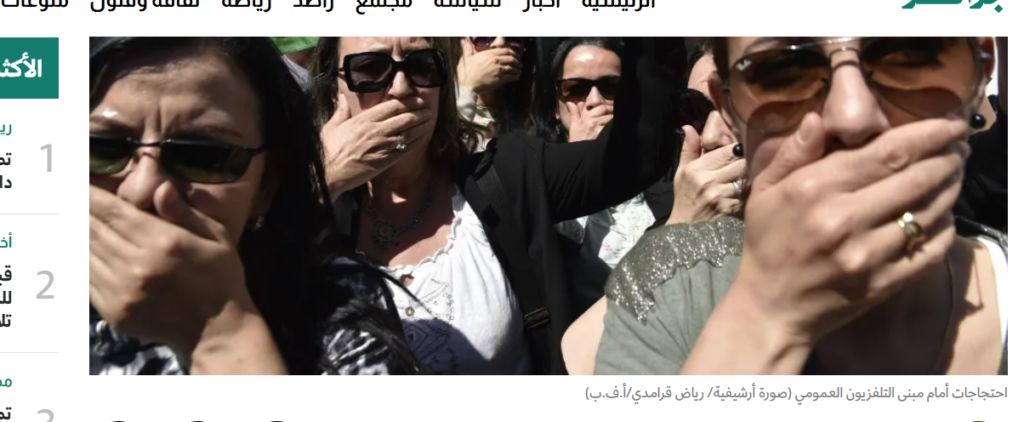
But perhaps an even harder question lies elsewhere. How can women truly express what they need when the reality around them has taught them to stay silent? In many environments, a television panel made entirely of men is seen as normal. A newsroom board with no women is seen as normal. A male boss who shouts or humiliates his female colleagues is still too often accepted as part of the job.
In such contexts, silence is mistaken for professionalism and patience is confused with politeness. Many women have learned that speaking up for themselves is risky, that asking for respect might be seen as arrogance, and that demanding fair treatment can isolate them even more. When everyday inequality becomes invisible, it also becomes internalized. What is “normal” is no longer questioned, and what is unfair is quietly endured.
So when we ask women what they need to thrive, we must also ask whether the systems around them allow them to answer honestly. Because if their voices have been conditioned to remain within the limits of what society finds acceptable, then the data we collect will always reflect the silence before it reflects the truth.
These questions go far beyond technology. They are moral, cultural, and political. Without inclusion at the level of data and without the courage to challenge what is still considered normal, the systems we build — in media, in artificial intelligence, and in society itself — will continue to reproduce the same exclusions, only faster and with greater precision.
This article is based on a survey-based analysis conducted through an online study between September and November 2025 by the MENA Impact Women team, covering Tunisia, Egypt, Syria and Algeria.